

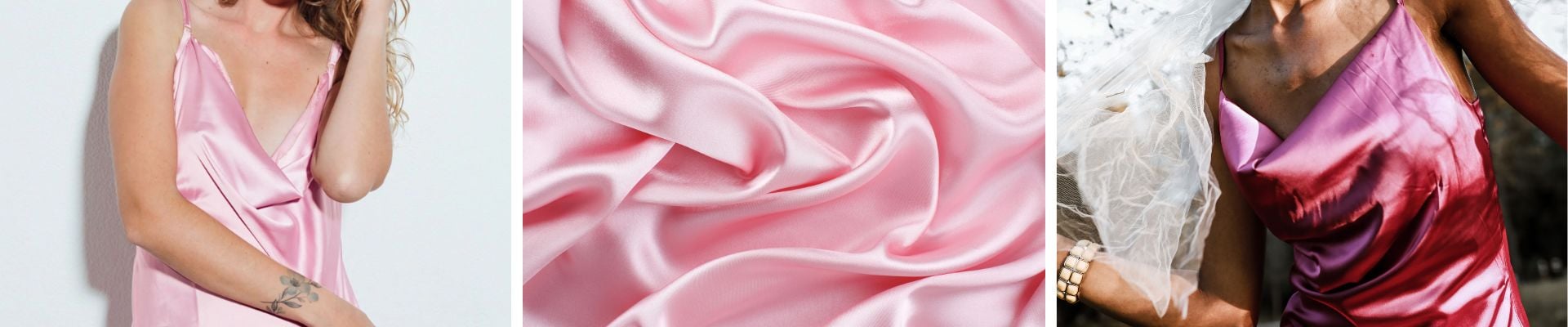
La seta: un tessuto simbolo di eleganza e raffinatezza che accompagna fin dall'antichità e sin da allora considerata un materiale estremamente nobile e di prestigio. Grazie alle sue straordinarie proprietà, è possibile ricavare da essa altri tessuti e filati come il taffetà, chiffon e organza.
- CHE TIPO DI TESSUTO È LA SETA: la seta è una fibra proteica, prodotta dalla bava solidificata del Bombyx Mori, il famosissimo baco da seta
- COME CAPIRE SE È PURA SETA: se il tessuto è in pura seta, dovresti riuscire a vedere ad occhio nudo le singole fibre
- PERCHÈ LA SETA È PREGIATA: la seta, a seconda dei processi di lavorazione a cui è stata sottoposta, si presenta via via più pregiata
- COME SI LAVA LA SETA: consigliamo il lavaggio a mano o in lavatrice, a un massimo di 30 °


Bridal White Mikado
10.90 €/mt


Bridal Cream Mikado
10.90 €/mt


Bridal Optical White Mikado
10.90 €/mt


Bridal Black Mikado
10.90 €/mt


Dressmaking Silk Satin - White
39.00 €/mt


Black Stretch Silk Satin
39.00 €/mt


Antique Pink Stretch Silk Satin Fabric
39.00 €/mt


Light blue stretch silk satin fabric
39.00 €/mt


Natural Stretch Silk Satin Fabric
39.00 €/mt


Impressionistic Floral Print Satin - Pink
18.00 €/mt


Abstract Maculated Rasatello Red
12.00 €/mt


Abstract Brown Geometric Patterned Satin
12.00 €/mt


Crepe Silk High Fashion Black with Flowers
24.00 €/mt


Mikado Setato White
9.50 €/mt


Twill Silk Brown Geometries High Fashion
36.00 €/mt


Silk Satin Stretch Fabric Ash
39.00 €/mt


Maculata Setata muslin
9.90 €/mt


Cupro Setato
16.90 €/mt


Pure Silk Georgette Pink and Lilac Flowers
29.00 €/mt


Coming soon


Coming soon


Satin Set High Fashion Brown Polka Dot
24.00 €/mt


Satin Set High Fashion Blue Flowers
24.00 €/mt
Coming soon


Coming soon


Promo


Silk Satin High Fashion Roses and Yellow Flowers
14.00 €/mt
26.00 €/mt
-46%
Promo


Satin Set High Fashion Polka Dot Tones Beige
4.90 €/mt
26.00 €/mt
-81%


Satin Set High Fashion Zebra Patterned
26.00 €/mt



FINEST SILK
Silk is an extremely refined material, mostly used in dressmaking. It is generally used to hand sew silky evening dresses, airy blouses and much more. Let's discover together the main features, history and uses of this timeless material. Its main characteristic is the slow release of moisture and that's why silk clothes can be used all year round. In fact, they are elegant and beautiful, and have an excellent fit. Make sure to discover also the cotton sateen, which is also beautiful and elegant, perfect for special occasions and ceremonial dresses.
SILK FABRICS
We are proud to introduce you to our carefully selected collection of high quality silk fabrics, available in vibrant colors and motifs. Make sure to have a look to our precious high end floral silk, ideal to realize your sewing projects. Unleash your creativity and use this fabric to sew summer dresses, blouses, wide pants and much more. Choose your favorite one and dive into a world of uniqueness and elegance. Do you want to learn more about this fabric?

Features of Silk
With its smooth and elegant texture, silk is known and appreciated for its excellent features. Among the main ones we find and excellent drape, fire resistance and a wrinkle-free appearance. In addition, it is breathable on the skin and has a good absorbency: these two qualities together make this fabric ideal for summertime. The most appreciated quality of this material is of course, its bright and luminous surface.Benefits of silk
- slippery
- bright
- lightweight
- fresh
- absorbent
- breathable
- comfortable
- fire resistant
- tear resistant
Disadvantages of silk
- difficult to wash and iron
- stains are not easily removable
- delicate
TOUCH: smooth, slippery and cold
SOUND: sweet

HOW SILK IS MADE
Silk is a natural fiber produced by the species Bombyx Mori, the famous silkworm and their cocoons. The silk production process begins directly with the cultivation of silkworms. Once hatched, silkworms eat only mulberry leaves. They consume them voraciously and grow rapidly. During this period, which lasts about a month, they molt several times. After the last molt, they begin to weave their cocoons.
Silkworms begins to secrete a liquid called sericin, which hardens on contact with air. Before the silkworms transform into moths, the cocoons are carefully harvested. To obtain long, continuous silk fibers, the cocoons are usually boiled, and the silkworm inside dies.
Once the cocoons are collected, the process of reeling the silk begins. The cocoons are immersed in hot water to soften the surface and the unwinding of the silk fibers. The fibers from several cocoons are carefully unwound and combined to form a single silk thread.
Once the silk threads have been extracted, they are twisted to form the silk thread. The thread is dyed and prepared for weaving. Silk fabric is created by interweaving the threads on a loom. SILK CARE AND MAINTENANCE
Silk can be both hand or machine washed, but there are a few measures to follow. In fact, silk is very delicate and can be ruined during the washing. First of all, the water temperature must be mild and constant and you must use neutral detergents. If you have to wash your silk clothes in the washing machine, the centrifuge is highly discouraged since is very weak when it's wet. We always recommend to dry clean your silk pieces to preserve their beauty and qualities through time. If the fabric is stained, we recommend to dry clean your garments, since water could expand the stain. As regard the drying of silk, we always recommend to air dry this material far from direct sunlight and heat sources. Totally avoid the tumble dryer. Silk ca be ironed by following some tips and instructions. Before ironing, place silk between two damp cloths to slightly damp it. Moreover, it is essential ironing this material on the reverse side with the iron not too hot, and placing a cotton cloth between the iron and silk.